Opening
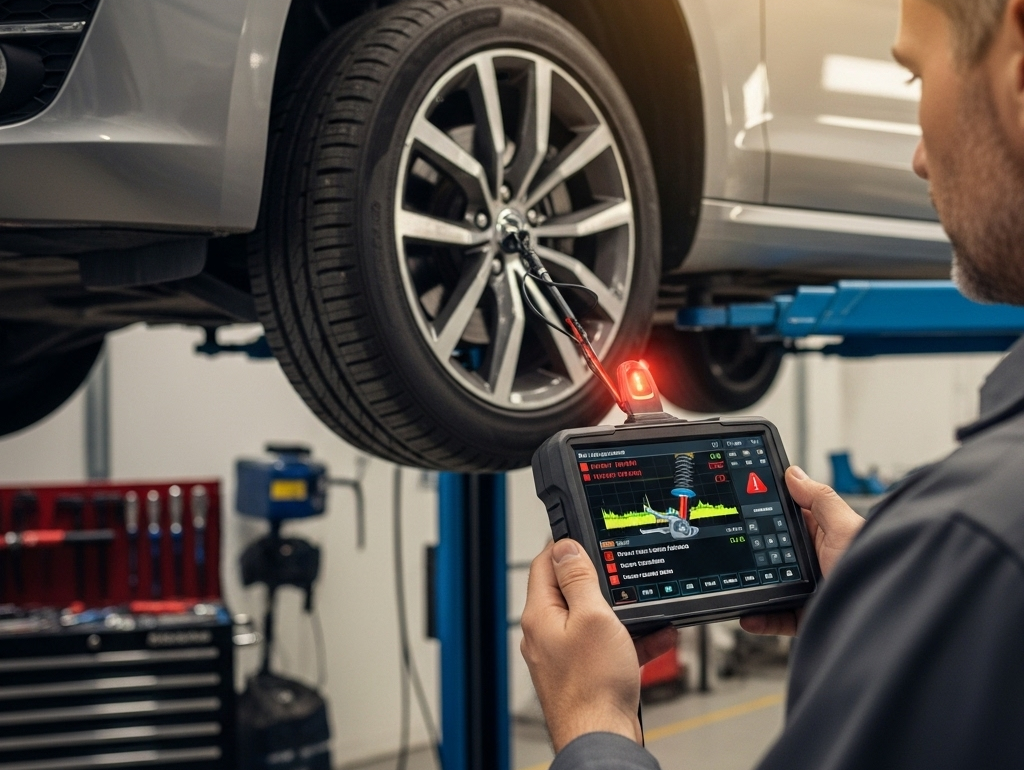
The climbing elaborateness involving modern automobiles necessitates a complete careful familiarity of diagnostic methods, particularly concerning On-Board Diagnostics II (OBD2) and Tire Pressure Monitoring Devices (TPMS). In Europe, Asia, and the US, these developments perform using heterogeneous frequencies. OBD2 rules are largely aligned globally, essentially utilizing ISO 9141-50, KWP2000, CAN, and others, but regional enforcements can yield minor alterations. TPMS, however, is where major frequency fluctuations develop. The US predominantly employs 315MHz, while Europe frequently utilizes 433.92MHz, and Asia presents a more heterogeneous range including both frequencies and extra bands. Accordingly, exact diagnostic instruments must be furnished with the potential to decode these multiple frequencies to assist effective resolution and maintenance.
Deciphering TPMS Sensor Frequencies: A Global Guide (Europe, North America, Asia)
Apprehending tire sensing system (TPMS) probe rates through the earth appears complex. Customarily, North lands largely utilize 315 MHz, though some newer vehicles utilize 433 MHz. Whereas, Europe and most of Asia mainly function on the 433 MHz transmission, with some district variations occurring particularly in particular Asian lands. Therefore, crucial to ensure the legitimate channel in advance of procuring TPMS gauges to promote conformity and circumvent imminent problems.
EV System Scanners: OBD2 Compatibility and TPMS Integration
Latest electric transport analyzers are increasingly absorbing crucial functionality, concerning with respect to both universal On-Board Diagnostics II (OBD2) interaction and Tire Pressure Monitoring System (TPMS) association. Plenty of eco-friendly cars utilize OBD2 ports for fetching vital system statistics, allowing technicians and custodians to identify likely failures. Furthermore, smooth TPMS unification provides reliable tire force values, fostering to improved welfare and octane conservation. This integration of OBD2 connectivity and TPMS operability symbolizes a important breakthrough in battery-operated auto inspection.
Tire Monitoring Frequency Contrasts: European Region vs. The US vs. Far East - A Comprehensive Comparison
Those frameworks responsible for monitoring tire load—TPMS—operate on discrete radio frequencies, leading to crucial regional changes. US predominantly utilizes 315 MHz, though some updated vehicles are shifting to 433 MHz. Eurozone mandates 433.92 MHz, a fixed frequency to guarantee conformity across territories. Asian Region exhibits a more complex landscape, with particular areas using 315 MHz, others 433 MHz, and still other territories employing a mix of both. This inconsistency creates challenges for workshops and car users when dealing with replacement TPMS detectors or diagnostic technology, necessitating careful confirmation of regional regulations to preclude failures and secure proper efficiency of the TPMS.
Auto Scanners for Battery-Powered Cars: Tire Pressure Monitoring System Examination & Radio Wave Processing
Current car inspectors are continually increasing to serve energy-based machines, exclusively focusing on wheel pressure monitoring examination. Unlike middle combustion transport units, electric transport present particular obstacles when it comes to wheel pressure system testing. Many battery-powered vehicles use diverse tire sensor platforms signals requiring the scanner to meticulously understand the channel in use. This ability enables service personnel to exclusively observe tire data but also pinpoint the clear transmission being sent by the tire monitoring probes, enabling in reliable diagnosis of defects.
Asia Tire Monitoring Ranges: Which Want to Comprehend?
Understanding the world of auto TPMS can be a puzzle, primarily due to the varying frequencies utilized across European Region, Asia, and the United States. European Union’s vehicles predominantly use 433.92 MHz, while various Asian countries employ 315 MHz and 433.92 MHz, creating a complex situation for mechanics. In the US, both 315 MHz and 433.92 MHz are frequently used, with 315 MHz being more dominant. Hence, understanding these regional differences is necessary for accurately troubleshooting TPMS deficiencies and selecting the suitable programming tools.
Expanding those Primary Elements: Auto Scanning, Battery-Powered Transport Vehicles, plus Wheel Pressure System Unit Bandwidth Recognition
Pertaining to seasoned mobile unit mechanics, purely understanding those crucial elements about vehicle data, EV motor vehicle structures, plus air pressure detection sensor wave detecting represents one decisive next level. The aforementioned themes go through primal approaches, necessitating unique gadgets in conjunction with expertise in order to appropriately recognize and fix complicated complications connected with machine wheel pressure, electric framework capacity, together with mechanical system snag codes. Additionally, properly locating pressure gauges module bands – regularly diverge during separate makes and models – is critical for successful recalibration.
EV Diagnosis: Using OBD2 Scanners to Troubleshoot TPMS
Diagnosing Tire Pressure Monitoring Systems tire pressure systems in electric vehicles electric cars often necessitates more than just visual inspection. Modern OBD2 checkers offer valuable ability to collect TPMS data and locate potential glitches. Utilizing these tools, technicians can decode fault codes, verify sensor condition, and even apply sensor analyses, allowing for rapid diagnosis of pressure detection problems and minimizing outage periods. Such is especially crucial given the increasing complexity of EV devices.
Managing Tire Pressure Monitoring Systems Signals: A Step-by-step Tutorial for Eurozone, the East, and the US & Canada
Adequately deploying pressure gauges throughout European Region, Eastern Asia, and United States and Canada requires a full awareness of the varying wave channels they implement. Unlike a harmonized system, the globe often maintains specific bandwidths. Specifically Europe predominantly depends on hundreds fifteen MHz and 433.92 MHz band, while the Continent typically uses 315 MHz range though several fresh models could embrace 433.92 MHz frequency. Far East offers a greater tpms sensor frequency europe north america multiplicity scenario, with numerous signal extents used, according to the specific country and car manufacturer.
- Regard area rules regarding signal transmission.
- Seek out your driver's guide for detailed frequency.
- Utilize a monitoring device specialized in evaluating various waves.