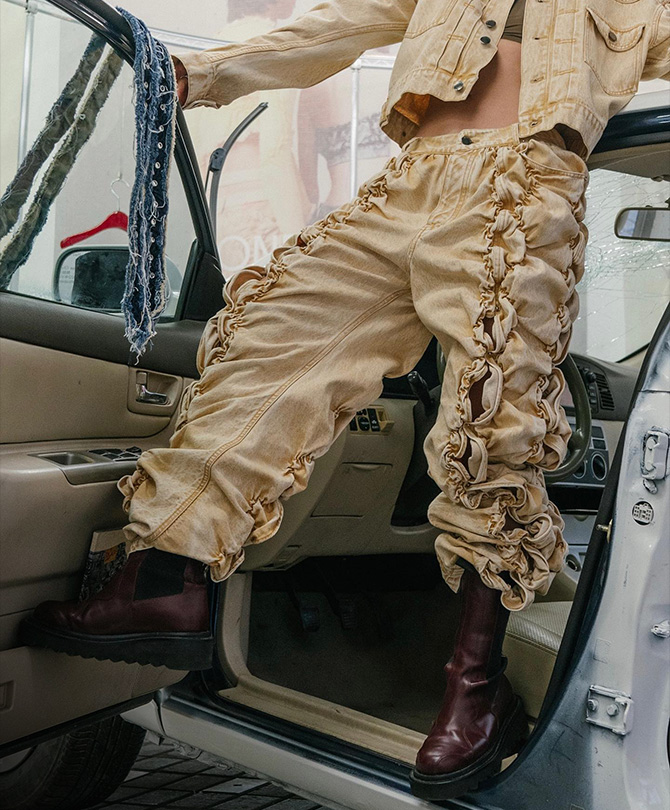
What construction details make sweatpants feel more premium?
A pair of sweatpants looks like the most basic item on a rack. However, when a consumer touches a $150 pair versus a $40 pair, they immediately feel the difference without needing to read the tech pack or check the brand logo. The real gap is not in the marketing—it is in the unseen construction details, the rigorous fabric engineering, and the strict sample-to-bulk execution that most general apparel factories simply fail to control. For independent brands with real traction, understanding these hidden manufacturing layers is the difference between a product that builds long-term loyalty and one that ends up in the discount bin.
The reality of modern streetwear is that consumers have developed an incredibly high sensitivity to tactile quality and structural integrity. They might not know the exact GSM count or the specific seam construction, but they can feel when a garment lacks density, when the drape is off, or when the hardware feels cheap. This shift in consumer expectations means that procurement teams and product development departments can no longer rely on basic blanks or generic production methods. Elevating a simple silhouette into a premium piece requires a deep understanding of how every stitch, wash, and fabric choice interacts during bulk production. When established streetwear brands move into higher price points, the manufacturing margin of error shrinks to zero.
Why does fabric weight and hand-feel define the foundation of premium sweatpants?
Fabric weight and hand-feel are the first tactile signals of quality. Premium sweatpants require heavyweight fleece (often 400gsm or higher) with a dense knit structure, ensuring the garment holds its shape, drapes correctly, and resists long-term pilling, which basic manufacturers struggle to maintain consistently.
The tactile experience of a garment dictates its perceived value the moment it is picked up. When discussing premium streetwear production, heavyweight cotton or heavyweight French Terry is not just a buzzword; it is a structural requirement. A fabric weight of 400gsm or higher provides the necessary rigidity to support oversized or baggy silhouettes, preventing the fabric from clinging awkwardly to the body. This density ensures that the sweatpants fall with a clean, structured drape, stacking perfectly over sneakers rather than bunching up unpredictably. Without this foundation, even the best design will look cheap when worn.
However, heavyweight fabric introduces significant manufacturing complexity. A dense knit structure is notoriously difficult to cut and sew consistently. Standard sewing machines in general apparel factories often struggle with the thickness of the seams, leading to skipped stitches, needle breakage, and uneven tension. This is why established streetwear brands must partner with a specialized streetwear factory equipped with heavy-duty machinery calibrated specifically for thick fleece. When needles break or tension is off, the structural integrity of the seam is compromised, leading to blowouts after only a few wears.
Furthermore, the hand-feel of these heavy fabrics is heavily influenced by the finishing processes. Techniques such as enzyme washing or silicone washing are applied to soften the rigid fibers, creating a luxurious, lived-in feel without compromising the structural integrity of the garment. These washes break down the surface fibers just enough to remove the harshness of raw heavy cotton, resulting in a product that feels premium immediately off the shelf.
Procurement teams must rigorously evaluate the fabric during the pre-production sample phase. The core challenge is not just finding a heavy fabric, but ensuring that the hand-feel remains consistent after the wash treatments. Unstable wash control can lead to batch-level variations where one run feels buttery soft while the next feels stiff and abrasive. Additionally, shrinkage control is paramount when dealing with heavy cotton. If the fabric is not properly pre-shrunk or if the shrinkage tolerance is not accurately calculated during pattern development, the final product will warp after the first home wash, destroying the intended fit and infuriating the consumer.
How does fit engineering separate custom streetwear from generic blank apparel?
True premium fit engineering requires custom pattern development, not just simple size enlargement. Achieving the perfect baggy, oversized, or wide-leg silhouette demands precise adjustments to the rise, inseam, and taper, ensuring the sweatpants stack correctly over sneakers without looking sloppy.
The most common misconception in apparel manufacturing is that an oversized fit simply means grading up a standard pattern by two sizes. This approach invariably results in garments that look ill-fitting, with dropped crotches that restrict movement and waistbands that bunch uncomfortably.
Custom streetwear development requires meticulous pattern engineering. When creating a wide-leg pants silhouette or a heavily stacked sweatpant, the pattern maker must recalibrate the entire geometry of the garment. The rise must be adjusted to sit comfortably on the waist or hips depending on the intended styling, while the thigh and knee widths must be expanded proportionally to create volume without excess bulk.
This level of fit engineering is what fundamentally separates a premium product from generic white label or blank apparel. Blank garments are designed to fit the widest possible demographic, resulting in a compromised, middle-of-the-road silhouette. In contrast, streetwear brands with proven sales rely on highly specific, culture-driven aesthetics. The taper from the knee to the ankle, for instance, dictates how the sweatpants interact with footwear. A premium cut-and-sew streetwear factory understands that the hem opening must be calculated to the millimeter to ensure the fabric pools perfectly over a chunky sneaker rather than dragging on the floor or looking unnaturally flared.
During the tech pack review, product development teams must scrutinize the grading rules across all sizes. A silhouette that looks perfect on a size Medium sample can completely lose its balance when graded to an XXL if the proportions are not scaled intelligently. The crotch drop might become too extreme, or the leg opening might become disproportionately wide. This is where the expertise of a specialized manufacturer becomes invaluable. They do not just follow the tech pack blindly; they anticipate how the heavy fabric will behave when draped in larger volumes and adjust the patterns to maintain the silhouette's integrity across the entire size run. Procurement teams should always request size set samples before approving bulk cutting to verify that the fit engineering holds true across the board.
What construction techniques prevent structural failure during bulk production?
High-end construction relies on reinforced stitching, flatlock seams, and premium trims. These details prevent crotch blowouts, pocket sagging, and waistband rolling during heavy wear, which are common failure points when production is rushed or handled by non-specialized factories.
The longevity of a garment is determined by its construction details, many of which are invisible from the outside. When a consumer invests in premium streetwear, they expect the garment to withstand heavy daily wear, frequent washing, and active lifestyles. This durability is achieved through rigorous sewing standards that go far beyond basic overlock stitching. In premium sweatpants, critical stress points—such as the crotch seam, pocket bags, and the waistband attachment—must be reinforced. Techniques like twin-needle coverstitching or flatlock seams are essential. These methods not only provide a cleaner, flatter finish on the interior, enhancing comfort against the skin, but they also offer superior stretch and recovery, preventing the seams from snapping under tension.
The waistband and pockets are particularly vulnerable areas that expose the true capability of an apparel manufacturer. A common issue with lower-tier production is waistband rolling, where the elastic twists inside the casing after a few washes. Premium construction solves this by using multi-needle stitching to secure the heavy-duty elastic directly to the fabric, ensuring it remains flat and stable. This multi-channel stitching requires specialized machinery and precise tension control to avoid puckering the fabric.
Similarly, pocket construction requires careful attention. Shallow pockets or pockets made from thin, low-grade lining material will sag and eventually tear when holding heavy items like phones or keys. A specialized streetwear production partner will utilize deep, bar-tacked pockets lined with durable cotton jersey or self-fabric to maintain the garment's structural integrity. The placement of the bar-tacks must be exact, reinforcing the corners of the pocket opening without adding unsightly bulk to the side seam.
Trims and hardware are another area where premium execution is undeniable. Custom metal eyelets, heavy-gauge drawstrings with branded metal aglets, and high-quality zippers elevate the tactile experience. However, these heavy trims require precise application. If the fabric around an eyelet is not properly interfaced and reinforced, the metal will eventually tear through the fleece over time. Procurement teams must verify these construction details during the pre-production sample phase. It is not enough for the sample to look good visually; the internal finishing, the sewing tolerance, and the quality of the trims must be scrutinized to ensure they can withstand the rigors of bulk production without substitution or compromise.
Why is sample-to-bulk alignment the true test of a streetwear manufacturing partner?
Approving a perfect sample is easy; replicating it across thousands of units is the real challenge. Premium streetwear production requires strict quality control systems to ensure wash consistency, dimensional stability, and trim accuracy remain identical from the first piece to the last.
The most dangerous phase in product development occurs between the approval of the pre-production sample and the delivery of the bulk order. A golden sample is carefully crafted by master sample makers, often with meticulous attention to detail and unrestricted time. However, when that same tech pack is handed over to the bulk sewing lines, the reality of mass production sets in. Sample-to-bulk mismatch is a notorious issue that plagues brands scaling their operations. Variations in fabric shrinkage, inconsistent wash effects, and slight deviations in graphic placement can completely ruin a production run. For established streetwear brands, these inconsistencies are unacceptable, as they directly damage brand trust and lead to high return rates.
Maintaining alignment requires a manufacturing system built for bulk-ready control. This means that every step of the process, from fabric sourcing to final inspection, must be standardized and monitored. Wash techniques, such as acid wash or vintage distressing, are particularly volatile during mass production. An acid wash effect relies on chemical reactions that can vary wildly depending on the ambient temperature, the exact chemical concentration, the water quality, and the specific batch of fabric. A premium streetwear manufacturer mitigates this risk by conducting extensive wash testing on bulk fabric rolls before cutting, establishing strict parameters that the dye house must follow to ensure batch-level consistency.
This is where the choice of a production partner becomes a critical business decision. For brands evaluating their supply chain, finding a specialized is essential to navigate these complexities. A reliable partner implements robust quality control protocols, including in-line inspections and strict sewing tolerances, to catch deviations before they compound into a ruined batch. They understand that sample-to-bulk alignment is not just about matching the visual aesthetic; it is about replicating the exact hand-feel, the precise fit engineering, and the structural durability across every single unit. When procurement teams evaluate a factory, their focus should not be on the initial quote, but on the factory's proven ability to deliver repeatable excellence at scale. The cost of a ruined bulk order far exceeds the savings of a lower per-unit quote.
The Reality of Premium Execution
Creating premium sweatpants is an exercise in technical discipline and operational maturity. The tactile superiority, the perfect drape, and the enduring construction are not accidental byproducts; they are the result of deliberate, engineered decisions made long before the fabric is ever cut. From selecting the right heavyweight fleece to executing complex pattern development and ensuring rigorous sample-to-bulk alignment, every step requires a specialized approach.
For independent brands with real traction, moving beyond generic blanks and investing in true custom streetwear development is the only path to delivering products that meet the elevated expectations of today's consumers. The real value of a premium garment lies in the unseen details, and mastering those details is what separates a fleeting trend from a lasting brand. When product development teams and procurement managers align on these technical realities, they build a supply chain capable of supporting true brand growth.
Why does tech pack review dictate the success of complex streetwear categories?
The tech pack is the operational blueprint of the garment. For premium sweatpants, a thorough tech pack review ensures that complex variables like shrinkage tolerance, wash shrinkage, and trim placement are mathematically aligned before sampling begins, reducing costly delays.
When brands transition from basic blanks to custom streetwear development, the tech pack transforms from a simple visual guide into a rigorous technical document. The complexity of modern streetwear—which often combines heavyweight fabrics with aggressive wash techniques—requires an unparalleled level of detail. A common failure point for brands with less manufacturing experience is submitting a tech pack that focuses entirely on aesthetics while ignoring the mechanical realities of production. For instance, if a brand specifies an enzyme wash for a 400gsm French Terry sweatpant, the tech pack must account for the specific shrinkage percentage that will occur during the wash process. If the pattern is not graded to accommodate this shrinkage, the final bulk order will end up significantly smaller than the approved sample.
A specialized streetwear clothing manufacturer approaches the tech pack review as a collaborative engineering process. Before a single yard of fabric is cut for the first sample, their product development teams will scrutinize the specifications to identify potential manufacturing bottlenecks. They will analyze the sewing tolerance required for thick seams, evaluate whether the specified drawstrings are too heavy for the chosen eyelets, and verify that the pocket depth will not interfere with the drape of the wide-leg silhouette. This proactive technical review is what separates a true manufacturing partner from a mere order-taker.
Furthermore, the tech pack must explicitly define the quality control parameters. It should detail the acceptable variance in wash color, the exact placement of any embroidery or screen printing, and the specific stitch density required for reinforced areas. By establishing these metrics upfront, procurement teams create a clear, objective standard for evaluating both the pre-production sample and the final bulk delivery. When the technical foundation is solid, the risk of sample-to-bulk mismatch is drastically reduced, ensuring that the final product accurately reflects the brand's premium positioning.
How do procurement teams evaluate the true cost of premium manufacturing?
True manufacturing cost is not defined by the initial per-unit quote, but by the total cost of execution. Procurement teams must factor in the cost of delays, quality failures, and high return rates when evaluating a premium , prioritizing long-term production consistency over price-only thinking.
In the competitive landscape of fashion production, it is easy for brands to be swayed by the lowest initial quote. However, experienced procurement teams understand that generic manufacturing often carries hidden, exorbitant costs. When a brand selects a general apparel factory based solely on price, they are usually sacrificing the specialized knowledge and rigorous quality control required for premium streetwear. This compromise manifests in subtle but destructive ways: inconsistent sizing across a bulk order, wash effects that degrade after a single home wash, or hardware that fails prematurely.
The true cost of a manufacturing failure extends far beyond the factory floor. If a bulk order of premium sweatpants arrives with structural defects or severe sample-to-bulk misalignment, the brand faces a cascade of financial and reputational damage. Launch dates are missed, marketing budgets are wasted, and customer trust is eroded. In the era of social media, a single drop of poor-quality garments can severely damage a brand's standing in the streetwear community. Therefore, when evaluating a production partner, procurement teams must shift their focus from the lowest possible price to the highest possible value through quality consistency.
A reliable streetwear manufacturing partner operates with a different pricing logic. Their quotes reflect the cost of premium fabric sourcing, specialized heavy-duty machinery, extensive wash testing, and rigorous in-line quality control. While the upfront cost may be higher, this investment guarantees a repeatable, bulk-ready execution that protects the brand's reputation and minimizes the risk of costly returns. For established streetwear brands, the ability to scale production without sacrificing the tactile quality and fit engineering of their garments is the ultimate competitive advantage. Choosing a partner that understands the cultural and technical demands of streetwear is not just a sourcing decision; it is a strategic investment in the brand's long-term viability.
Why Repeat Graphic Tee Drops Need a Manufacturer Built for Custom Production?
A heavyweight graphic tee looks simple on a rack, but most production problems start before sewing even begins. For established streetwear brands running repeat drops, the challenge is rarely about finding a factory that can print a logo. The real friction happens when a brand scales from a single successful drop to a continuous release calendar. The graphic placement shifts by an inch. The heavyweight cotton shrinks differently after an enzyme wash. The boxy fit suddenly feels slightly off in the larger sizes. These are not design failures — they are manufacturing inconsistencies that occur when a brand outgrows a general apparel factory and actually needs a specialized streetwear manufacturer.
When independent brands with real traction move from testing concepts to running consistent seasonal programs, the technical threshold changes completely. A drop model relies entirely on execution speed and sample-to-bulk alignment. If the pre-production sample is perfect but the bulk delivery has a 5% variance in neck ribbing tension, the entire drop is compromised. This is why repeat graphic tee drops require a production system built for custom streetwear development, not a generic facility focused on volume over precision.
Why is streetwear manufacturing more technical than basic apparel production?
Streetwear manufacturing requires precise control over fabric weight, complex wash techniques, and custom silhouettes. Unlike basic apparel production that relies on stock blanks and standard sizing, premium streetwear demands repeatable sample-to-bulk execution, where every drop maintains exact consistency in hand-feel, shrinkage, and graphic placement across the full size run.
The difference between a basic t-shirt and a premium graphic tee lies entirely in the technical execution. Many procurement teams assume that a t-shirt is the easiest category to source. In reality, it is one of the hardest to scale consistently, especially when the brand's identity depends on a specific weight, silhouette, and finish.
When a brand requests a 260gsm or 300gsm heavyweight cotton tee with a boxy fit and a dropped shoulder, they are not just asking for a heavier shirt. Heavyweight fabrics behave differently during the cutting and sewing process. They have different shrinkage rates, especially when subjected to complex wash treatments like acid wash, stone wash, or enzyme wash. A general clothing factory might cut the fabric exactly to the tech pack dimensions, only to find that the garment shrinks unevenly after the wash, ruining the intended silhouette.
A specialized streetwear manufacturer understands that pattern development must account for these variables before the first cut is made. The pattern engineering has to anticipate the exact shrinkage percentage of that specific heavyweight cotton under that specific wash condition. If the factory lacks this predictive capability, the brand will face severe batch-level variation during bulk production — a problem that is nearly impossible to fix after the fact.
What makes print placement difficult in streetwear production?
Print placement in streetwear is difficult because oversized and boxy fits alter how graphics sit on the body across different sizes. A graphic that looks perfect on a medium sample can look distorted or misplaced on an extra-large bulk unit if the manufacturer lacks specialized grading expertise and proportional scaling systems for each size.
For brands executing repeat graphic tee drops, the visual identity is often tied to the exact positioning of the print. Whether it is a massive back graphic, a high-density screen print, or a complex DTG (Direct-to-Garment) execution, the placement must be flawless and consistent across the entire production run.
The bulk risk here is significant. Many factories use a single screen size for all garment sizes to save time. While this might work for standard promotional wear, it is disastrous for premium streetwear. On an oversized fit, a graphic scaled for a size medium will look completely lost on an XXL. Conversely, if the graphic is too large, it might cross over the side seams on smaller sizes, breaking the visual composition entirely.
Procurement teams must verify that their manufacturing partner understands proportional grading for graphics. This means the factory must adjust the screen size or print area according to the garment size, ensuring the visual impact remains consistent across the entire size run. Furthermore, the print technique itself — whether it involves puff print, crack print, or mixed media decoration — must be tested against the specific fabric weight and wash finish. A heavy plastisol print on a garment-dyed tee might crack prematurely if the curing temperature is not perfectly calibrated to the fabric's specific dye process.
How do wash techniques change bulk production risk?
Wash techniques like acid wash, vintage wash, and enzyme wash introduce high unpredictability into bulk production. They affect fabric hand-feel, alter the final garment dimensions through shrinkage, and can degrade prints if the manufacturer does not have strict chemical concentration controls, temperature protocols, and batch-level testing procedures.
When a streetwear brand wants a vintage, lived-in aesthetic, they rely on complex wash techniques. However, an acid-wash tee is not hard because of the wash name. It is hard because the effect has to stay controlled across hundreds or thousands of garments without visible batch-level variation.
The primary risk in wash-intensive streetwear production is sample-to-bulk mismatch. A factory might produce a beautiful, perfectly faded pre-production sample using a small, controlled wash batch. But when they move to bulk production, processing hundreds of garments at once, the chemical concentration, water temperature, and mechanical agitation all change. This can result in a bulk delivery where half the tees look too dark, and the other half have degraded fabric integrity — a situation that is both commercially damaging and nearly impossible to reverse.
To mitigate this, product development teams must demand rigorous wash testing during the sampling phase. A reliable OEM streetwear manufacturer will not just provide a single sample; they will conduct wash trials to establish a repeatable formula. They will test how the heavyweight cotton reacts to the enzyme wash, how much it shrinks, and how the wash affects the hand-feel. This level of bulk-ready control is what separates a specialized streetwear factory from a general apparel supplier.
What should procurement teams check before approving a heavyweight tee sample?
Before approving a heavyweight tee sample, procurement teams must verify fabric weight consistency, post-wash shrinkage rates, neck ribbing recovery, sewing tolerance alignment, and the exact match between the physical garment and the tech pack specifications to ensure the sample can be accurately replicated in bulk production.
Sample approval is the most critical stage in the product development workflow, yet it is often where brands make their most expensive mistakes. A common scenario for brands scaling their production is approving a sample based purely on its aesthetic appeal, without verifying its technical viability for bulk manufacturing.
When evaluating a heavyweight graphic tee, procurement teams must look beyond the surface. First, they need to verify the fabric weight. A 260gsm cotton should feel substantial and hold its structure. If the fabric feels limp or lacks density, it may not support the intended boxy or oversized fit across the full size range.
Second, the neck ribbing must be tested for recovery. A premium streetwear tee requires a tight, durable collar that does not stretch out after a few wears. The factory must use high-quality elastane in the ribbing and attach it with precise sewing tolerance, ensuring the neckline retains its shape through repeated washing.
Third, the team must check the sample against the tech pack with absolute precision. Are the dropped shoulders exactly where they were specified? Is the chest width consistent with the intended silhouette? If there are discrepancies, the factory must explain why they occurred. Sometimes, a factory will make unauthorized adjustments to the pattern to make sewing easier, compromising the design intent. A true streetwear manufacturing partner will communicate these technical challenges during the tech pack review, rather than making silent changes that only surface during bulk inspection.
Why does an oversized fit require real pattern development instead of simple size enlargement?
Oversized fit requires real pattern development because simply enlarging standard dimensions ruins the garment's proportion. A true oversized silhouette demands precise adjustments to the shoulder drop, armhole depth, sleeve angle, and body length to maintain structural balance, premium drape, and the intentional visual weight that defines the aesthetic.
One of the most frequent errors in streetwear manufacturing is the misunderstanding of the oversized fit. Many general apparel factories assume that an oversized tee is just a standard tee graded up two sizes. This approach results in a garment that looks sloppy, with sleeves that are too long, a neckline that gapes, and a body that lacks the structured volume that makes oversized streetwear look intentional rather than ill-fitting.
A specialized approaches an oversized fit through dedicated pattern engineering. The goal is to create a silhouette that feels intentionally voluminous while maintaining a structured drape. This means the shoulder seam must be carefully dropped, the armhole must be lowered and widened, but the neckline must remain tight and controlled. The body width is expanded, but the length might be slightly cropped to create a boxy proportion that reads as a deliberate design choice.
For streetwear brands with proven sales, this silhouette balance is a core part of their brand identity. If the pattern development is flawed, the entire collection suffers. This is why brands must work with factories that understand streetwear aesthetics at a technical level and have the pattern engineering capability to translate those aesthetics into precise, repeatable production blocks.
How should brands compare a general apparel factory with a specialized streetwear manufacturer?
Brands should compare factories based on their ability to execute complex streetwear techniques, manage sample-to-bulk consistency, and understand custom silhouettes. A specialized streetwear manufacturer focuses on technical execution and premium materials, whereas a general factory prioritizes basic construction and high-volume efficiency — a fundamental difference that becomes critical during bulk production.
As independent brands with real traction scale their operations, they often face a critical sourcing decision: should they stay with a general apparel factory that offers lower quotes, or move to a specialized streetwear manufacturer?
The difference becomes glaringly obvious during the transition from sample to bulk. A general factory might produce an acceptable sample, but their production systems are built for basic apparel. They lack the specialized machinery for heavy plastisol prints, the chemical expertise for consistent acid washes, and the pattern engineering skills for complex streetwear silhouettes. When faced with the demands of a premium graphic tee drop, their quality control often breaks down, leading to high defect rates, delayed launches, and the kind of inconsistency that damages a brand's reputation with its audience.
In contrast, an OEM streetwear manufacturer is built specifically to handle these complexities. Their production lines are calibrated for heavyweight fabrics. Their quality control teams know exactly what to look for in a vintage wash or a puff print. They understand that a 1cm deviation in graphic placement is a defect, not an acceptable tolerance.
For brands looking for a reference point for specialized custom streetwear production, partnering with a China-based custom often provides the necessary supply chain depth. The industrial clusters in China offer unparalleled access to premium fabrics, advanced printing technologies, and specialized wash facilities, allowing brands to execute complex designs with high consistency across bulk runs. Groovecolor, for example, operates as a China-based focused on heavyweight fabrics, complex wash techniques, and sample-to-bulk control — the kind of technical infrastructure that repeat drop programs actually require.
Which quality checks matter most before bulk streetwear production?
Before bulk streetwear production, the most critical quality checks include pre-production sample validation, fabric shrinkage testing, print durability testing, inline sewing inspection, and a strict review of sewing tolerances to ensure the factory's bulk execution will perfectly match the approved design and deliver a consistent premium product.
Quality control in streetwear manufacturing cannot be an afterthought; it must be engineered into the production process from the very beginning. For brands running repeat drops, any failure in bulk quality directly impacts their launch calendar, customer trust, and long-term brand equity.
The first major checkpoint is the Pre-Production Sample (PPS). The PPS must be made using the exact bulk fabric, the exact bulk trims, and the exact bulk wash process. If a factory tries to substitute a trim or use a slightly different fabric batch for the PPS, procurement teams must reject it immediately. The PPS is the absolute standard for the bulk run; any deviation here guarantees a problem later, and problems discovered after bulk cutting are exponentially more expensive to resolve.
Once bulk cutting begins, the factory must enforce strict sewing tolerances. In premium streetwear, the margin for error is incredibly small. A hem that is off by half an inch can ruin the proportion of a cropped tee. The factory must also conduct inline inspections to catch issues like needle cutting — where the sewing needle damages the fabric yarns — or inconsistent tension in the seams that creates puckering on the finished garment.
Finally, the finishing process requires meticulous attention. This includes final pressing, trimming loose threads, and ensuring that any applied techniques, such as rhinestone embellishments or appliqué, are securely attached and correctly positioned. A manufacturer for streetwear brands understands that the final inspection is not just about finding holes or stains; it is about ensuring that every single garment delivers the premium tactile and visual experience the brand promised its customers.
Why do repeat drops demand a long-term manufacturing relationship?
Repeat drops demand a long-term manufacturing relationship because consistent seasonal releases require a stable production system, predictable lead times, and a manufacturing partner who deeply understands the brand's specific fabric standards, fit blocks, wash formulas, and finishing expectations — knowledge that cannot be rebuilt from scratch with every new collection.
The drop model is inherently stressful on the supply chain. It requires rapid turnaround times, flawless execution, and the ability to scale production quickly based on market demand. Streetwear brands with validated market demand cannot afford to constantly switch factories and re-educate new suppliers on their brand standards. Every factory change resets the institutional knowledge that makes consistent production possible.
A long-term streetwear manufacturing partner becomes an extension of the brand's product development team. Over time, the factory builds a library of the brand's custom patterns, approved wash formulas, and preferred fabric weights. This institutional knowledge drastically reduces development time for future drops. Instead of starting from scratch with every new graphic tee, the brand can rely on a proven block pattern and focus entirely on the new artwork and wash techniques, compressing the development timeline significantly.
Furthermore, a strategic long-term partnership allows for better production planning. The factory can pre-book capacity for upcoming drops, source premium heavyweight cotton in advance, and anticipate potential bottlenecks in the wash or print processes. This level of operational maturity is essential for streetwear brands that want to scale their business without sacrificing the quality and consistency that built their audience in the first place.
In the end, the success of a repeat graphic tee drop is not just about the design. It is about the manufacturing infrastructure behind it. A drop that sells out in minutes is built on months of technical groundwork — fabric testing, pattern refinement, wash trials, print calibration, and pre-production validation. By aligning with a production partner built specifically for custom streetwear development, brands can eliminate the friction of bulk production and focus on what they do best: creating culture-driven products that resonate with their audience drop after drop.
streetwear manufacturer streetwear manufacturer custom streetwear manufacturer streetwear clothing manufacturer OEM streetwear manufacturer